Sam Simon · 6 September 2026
Unlocking Efficiency Gains Through Integrated Workflow Tools in Remote Work Settings
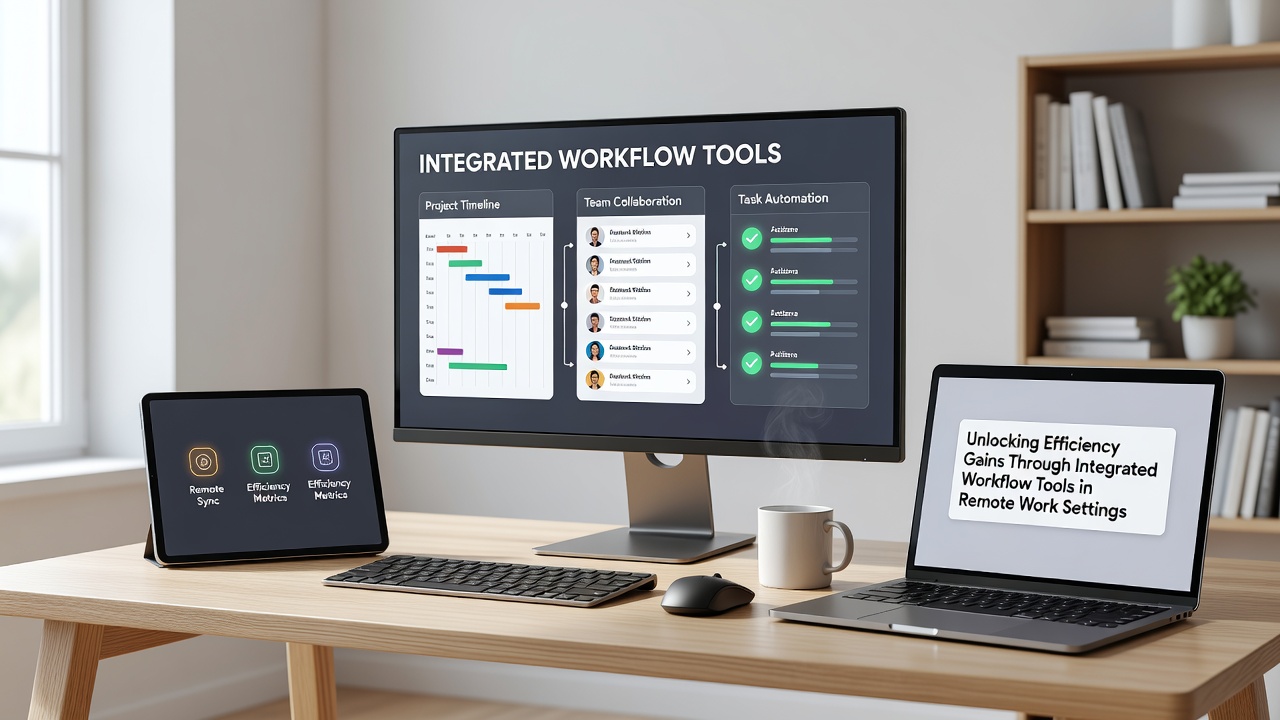
Remote work arrangements expanded rapidly after 2020, and integrated workflow tools emerged as central components for coordinating tasks across distributed teams while data from multiple regions documented measurable shifts in output metrics. These platforms combine project tracking, communication channels, file sharing, and automation features into single interfaces, allowing employees to move between functions without switching applications repeatedly. Researchers at institutions across North America and Europe tracked adoption rates that climbed steadily through 2025, with many organizations reporting consolidated systems replacing separate email, chat, and spreadsheet solutions.
Core Components of Integrated Platforms
Modern systems typically bundle task assignment modules with real-time messaging, version-controlled document repositories, and calendar synchronization, creating unified environments where updates propagate instantly across all connected users. One study released by the OECD in 2025 examined firms in member countries and found that teams using such combined interfaces completed project cycles 18 percent faster on average than groups relying on fragmented applications. The same analysis noted that error rates in data handoffs dropped when teams eliminated manual transfers between tools, since automated triggers handled routine updates without requiring individual intervention.
Security features also form part of these integrated setups, with role-based access controls and audit logs that meet compliance standards required in sectors such as finance and healthcare. Government agencies in Canada reported through Statistics Canada publications that organizations adopting centralized platforms experienced fewer security incidents related to version conflicts or lost files, because single-source data storage reduced the number of external sharing links employees needed to manage.
Measured Productivity Shifts in Distributed Teams
Figures compiled by the U.S. Bureau of Labor Statistics through mid-2026 indicated that sectors with high remote-work penetration, including information technology and professional services, recorded sustained output levels despite reduced office presence. When companies layered integrated workflow tools onto existing remote policies, internal audits frequently showed time spent on administrative coordination falling by double-digit percentages. Employees who previously navigated five or six separate logins reported fewer context switches, and aggregated logs from platform providers confirmed that daily active feature usage concentrated within fewer applications after integration.
Data released in September 2026 by Eurostat highlighted similar patterns across European Union member states, where companies that standardized on unified platforms documented higher rates of on-time deliverable completion compared with those maintaining legacy tool stacks. The report emphasized that smaller enterprises often achieved quicker implementation because fewer legacy systems required migration, while larger organizations needed phased rollouts to maintain continuity during transition periods.
Implementation Patterns Across Industries

Manufacturing firms that shifted engineering and design teams to remote models relied on these platforms to maintain oversight of technical specifications and revision histories. One case documented by academic researchers at the University of Melbourne demonstrated how an Australian automotive supplier reduced design review cycles from fourteen days to nine after deploying synchronized review and approval workflows. Service-sector organizations followed comparable paths, with consulting groups using built-in time-tracking modules to align client billing directly with project milestones without separate spreadsheet reconciliation.
Training requirements surfaced as a recurring factor during rollouts. Internal records from multiple firms indicated that structured onboarding sessions covering the integrated environment shortened the period needed for new hires to reach full productivity compared with piecemeal tool introductions. Observers note that video-based tutorials embedded directly inside the platforms further supported self-paced learning, reducing reliance on scheduled live sessions.
Challenges in Scaling and Maintenance
Integration projects occasionally encountered resistance when employees had established preferences for individual applications, yet organizations that provided clear migration timelines and parallel-run periods reported smoother transitions. Network latency issues arose in regions with variable connectivity, prompting some companies to configure offline-capable modules that synchronized once connections stabilized. Maintenance costs remained a consideration, particularly for custom automations that required periodic updates when underlying platform APIs changed.
Longitudinal data from academic sources continue to track whether efficiency gains persist beyond the initial adoption phase. Early indicators suggest that sustained benefits depend on ongoing configuration adjustments and periodic audits of workflow rules to prevent accumulation of outdated processes.
Conclusion
Integrated workflow tools have become standard infrastructure in many remote-work environments, with quantitative records from government statistical agencies and research institutions documenting reductions in coordination time and improvements in task completion rates. Organizations that align platform selection with existing operational needs and invest in user training continue to record these operational shifts across geographic regions. Future updates to these systems will likely incorporate additional automation layers, yet current evidence centers on the consolidation of functions as the primary driver behind observed efficiency patterns.